
5 Expanding Themes from AIA25 to AIA26
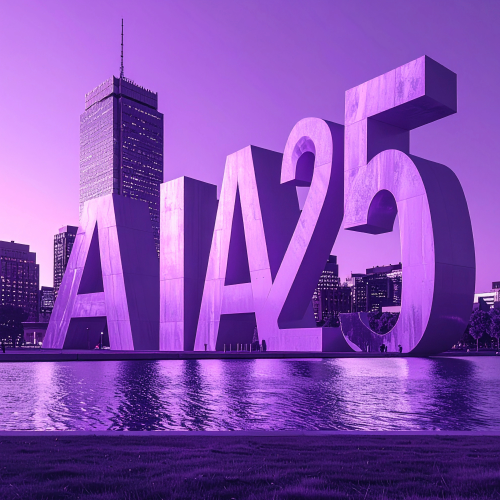
At the 2025 conference, AI discussions centered primarily on improving drafting efficiency, rendering, and workflow automation. This year, attention has shifted to 5 Expanding Themes form AIA25 to AIA26 that highlight the evolving priorities in the field.
1. AI Has Moved from Design Tool to Business Strategy
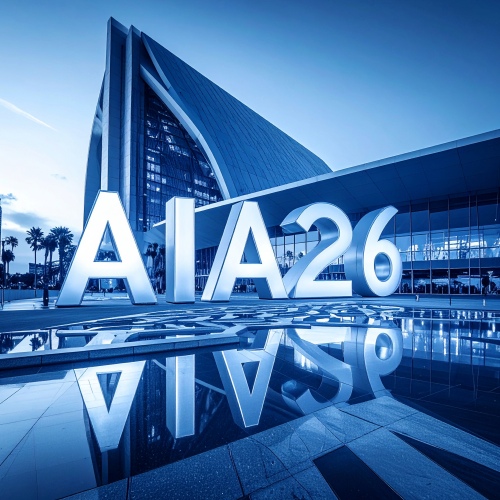
By AIA26 in San Diego, the conversation has expanded considerably. Sessions now address AI’s impact on firm management, client communication, trust, equity, and business competitiveness—not simply production speed. Architects are asking:
- How should AI influence client relationships?
- How do firms differentiate authentic design from AI-generated imagery?
- How can AI reduce project risk?
- Where should architects maintain human oversight?
Architect Insight
The firms that benefit most from AI will not be those creating drawings the fastest.
They will be those using AI to make better business decisions, improve coordination with consultants, identify constructability issues earlier, communicate design intent more effectively, and eliminate repetitive administrative work.
Technology is becoming a multiplier for architectural judgment rather than a replacement for it.
2. Sustainability Is Becoming Measurable
In Boston, sustainability focused largely on resilient design, regenerative materials, and environmental responsibility.
San Diego builds upon that foundation by emphasizing measurable outcomes including:
- embodied carbon
- adaptive reuse
- climate risk
- post-occupancy evaluation
- net-zero implementation
Rather than asking “Can we design sustainably?”
The industry is now asking:
“Can we prove it?”
Architect Insight
Owners increasingly expect data that demonstrates lifecycle performance—not simply sustainability intentions.
This is driving closer collaboration between architects, engineers, manufacturers, and specification teams much earlier in the design process.
3. Collaboration Is Expanding Beyond the Design Team
Boston highlighted integrated software and smoother digital workflows.
San Diego expands collaboration itself.
Many sessions now deliberately combine architecture with:
- engineering
- construction
- policy
- technology
- manufacturing
- urban planning
The emphasis has shifted from better communication inside the office to better coordination across the entire project ecosystem.
Architect Insight
Today’s projects increasingly succeed because information moves efficiently—not because drawings are produced faster.
Architects who establish strong relationships with manufacturers, fabricators, builders, and technical specialists early in design are reducing RFIs, shortening schedules, and improving project outcomes.
4. Firm Leadership Has Become a Design Skill
One noticeable expansion at AIA26 is the amount of programming dedicated to running successful firms.
Topics now include:
- succession planning
- financial strategy
- negotiation
- storytelling
- winning work
- technology strategy
- firm growth
- ownership transitions
This represents a subtle but important shift.
Architecture is increasingly viewed as both a design profession and a business discipline.
Architect Insight
Exceptional design alone rarely guarantees success.
The most resilient firms combine outstanding design with efficient operations, compelling storytelling, strategic marketing, and scalable project delivery systems. Future leaders will likely spend as much time refining business processes as refining floor plans.
5. Architecture Is Becoming a Connected System
Perhaps the biggest evolution from Boston to San Diego is philosophical.
Rather than treating design, sustainability, technology, fabrication, and construction as separate conversations, AIA26 presents them as interconnected systems.
This systems-based thinking appears throughout the conference:
- architect-led building tours
- multidisciplinary education
- AI implementation
- adaptive reuse
- climate resilience
- manufacturing innovation
- integrated project delivery
Architect Insight
The profession is moving beyond designing individual buildings.
Increasingly, architects are designing interconnected processes that unite people, technology, manufacturing, and construction into a seamless project experience.
That systems mindset may become one of the defining competitive advantages of the next decade.
Closing Observation
One subtle takeaway from AIA26 is that the profession appears to be maturing beyond isolated innovation. In previous years, conversations often revolved around individual technologies or materials. This year’s programming suggests that competitive advantage comes from integration—bringing together AI, sustainability, manufacturing, project delivery, and interdisciplinary collaboration into a cohesive practice.
For architects, this shift creates an opportunity to move beyond being design specialists and become orchestrators of the entire building ecosystem. Those who can connect ideas, people, technologies, and execution into a unified process will likely define the next generation of successful firms.
https://conferenceonarchitecture.com/